
If packing and moving your house feels overwhelming, just add a fish tank into the mix and it takes things to a whole new dimension of stress! Unlike an armchair or a box of crockery that is relatively safe during the move, a fish tank is a living, breathing ecosystem and one false step can be deadly for its occupants. A small 40 litre tank or a large 200 litre aquarium requires careful planning and equipment before you can begin the move and patience to see it through.
Here at Ausafe Removals, we’re Brisbane’s most trusted, local removalists and we know that every object within your home has its own importance. Especially your pet aquatic inhabitants. Follow our simple, easy to follow guide to successfully pack up and move a fish tank, step by step, and be reunited with your healthy, stress-free swimmers in your new house.
Why Moving A Fish Tank Is Trickier Than You Think?
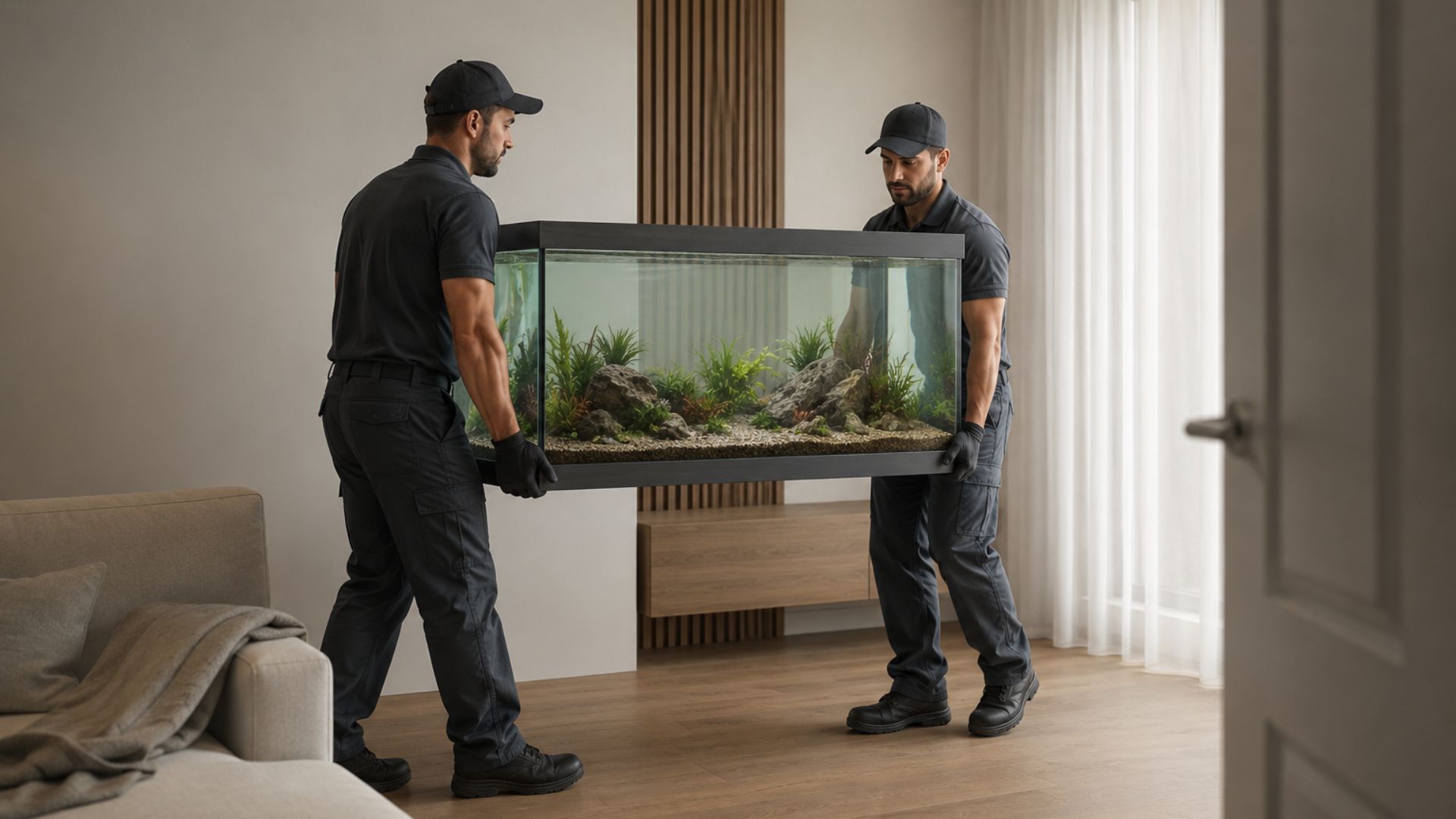
Fish are very delicate. If the temperature, pH or amount of oxygen in their water suddenly changes they could easily be thrown into shock. The tank itself is made of fragile material and extremely heavy. A full 100L fish tank would weigh around 100kg. If you were to try to carry the tank with the water still in it this would be incredibly dangerous for both you and the tank.
As well as the sheer weight of the tank, it would be easy to mess up the biological workings of the tank (the nitrogen cycle) if you were not careful with the gravel, filter and tank water. This is why there needs to be a logical and thought-out process involved in the moving of any fish tank.
What You’ll Need Before Moving Day?
Here’s a list of all the things you’ll need to gather ahead of time:
- Large food-grade plastic buckets with lids (5-20 liters each)
- Battery-powered air pump and airline tubing
- Fish nets (two will be more useful when catching fish)
- Sealable, insulated bags or fish transport bags
- Polystyrene box or cool box (to keep fish bags at stable temperature)
- Bubble wrap and moving blankets for tank
- Clean towels and paper towels
- Tape, scissors, and permanent marker pen
- Siphon hose or water pump (for draining tank)
- Water conditioner (dechlorinator)
Step-by-Step On Moving A Fish Tank
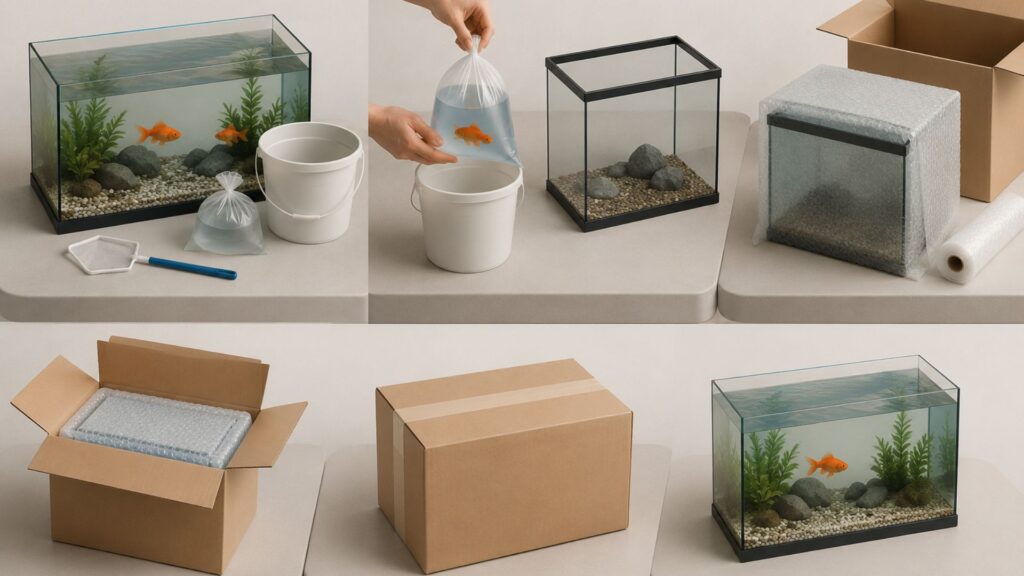
Step 1: Do not feed the fish for 24-48 hours prior to the move
It will feel cruel but it will benefit your fish in the long run as fish quickly pollute the transport containers with their waste once they eat. Withholding food for 24-48 hours will minimize any rise in ammonia in the water over the transport period.
Step 2: Prepare your buckets with tank water
On the day of the move, scoop out and save as much of the tank water as you can into clean, food-grade containers. This water will help keep the pH and temperature level right for your fish during transit. Around 50-80% of the water should be enough. DO NOT add untreated tap water as chlorine will kill fish.
Step 3: Catch and bag the fish
Carefully scoop your fish up using two nets as this is less stressful and less likely to injure the fish. Bag each fish individually or keep one or two in separate lidded containers with the tank water in them. For very short moves (less than 1 hour) use the lidded plastic buckets with the battery-powered pump and air tube in them. Place any fish bags in the polystyrene cool box.
Step 4: Remove all ornaments, equipment, etc.
Empty all the ornaments, plants, stones, heater, filter and other bits and bobs out and pack them carefully. Plants can be wrapped in damp newspaper or put in a container with tank water in. When removing the filter be very careful not to wash the bacteria from the filter media as this kills the beneficial bacteria responsible for removing ammonia in the tank. Remove the heater from the tank and allow it to cool fully before putting it in a box. The gravel or substrate should be scooped up into buckets of water to retain the bacteria in them.
Step 5: Empty all remaining water
Use your siphon or pump to get rid of all of the water in the tank. DO NOT try to move the tank if there is any water left in it – even a little water will put the weight on the glass, it will slide, and the tank will crack or break.
Step 6: Wrap and transport the tank
Wrap the empty tank with plenty of bubble wrap, followed by the moving blanket or a thick quilt/duvet and ensure the corners are particularly well protected. Place the tank in the moving vehicle upright where it cannot tip and strap it in if possible.
Step 7: Set up the tank immediately at the new location
This needs to be a priority in your new home. Assemble your tank in its new location, then refill the tank with the original tank water, then topped up with fresh, properly treated tap water. Replace filter, heater etc and turn on filter and heater to get the temperature correct. You can then carefully float the fish bags on the water in the tank for around 15-20 minutes to equalize temperature before releasing the fish.
Pro Tips For Ensuring Your Fish’s Safety During A Brisbane Move
- Move fish last, unpack them first. They should be in transit for the minimum possible time.
- Transport containers should not be left in the sun as this will cause the water to heat very quickly.
- For trips that will take over 2-3 hours, ask your local pet aquatic store if they supply pre-oxygenated professional fish transport bags.
- If you are moving delicate or extremely valuable species such as discus or saltwater fish, it may be worthwhile asking a specialized pet aquatic store to hold them on your behalf until you are settled.
- Label any buckets you have containing water – “FISH WATER – DO NOT THROW AWAY”.
- Try at all costs to keep the filter media moist. If the bacteria die in this medium you will then need to re-cycle the tank.
Also Read: Common Mistakes To Avoid While Moving
Let Ausafe Removals Take The Strain Out Of Your Move
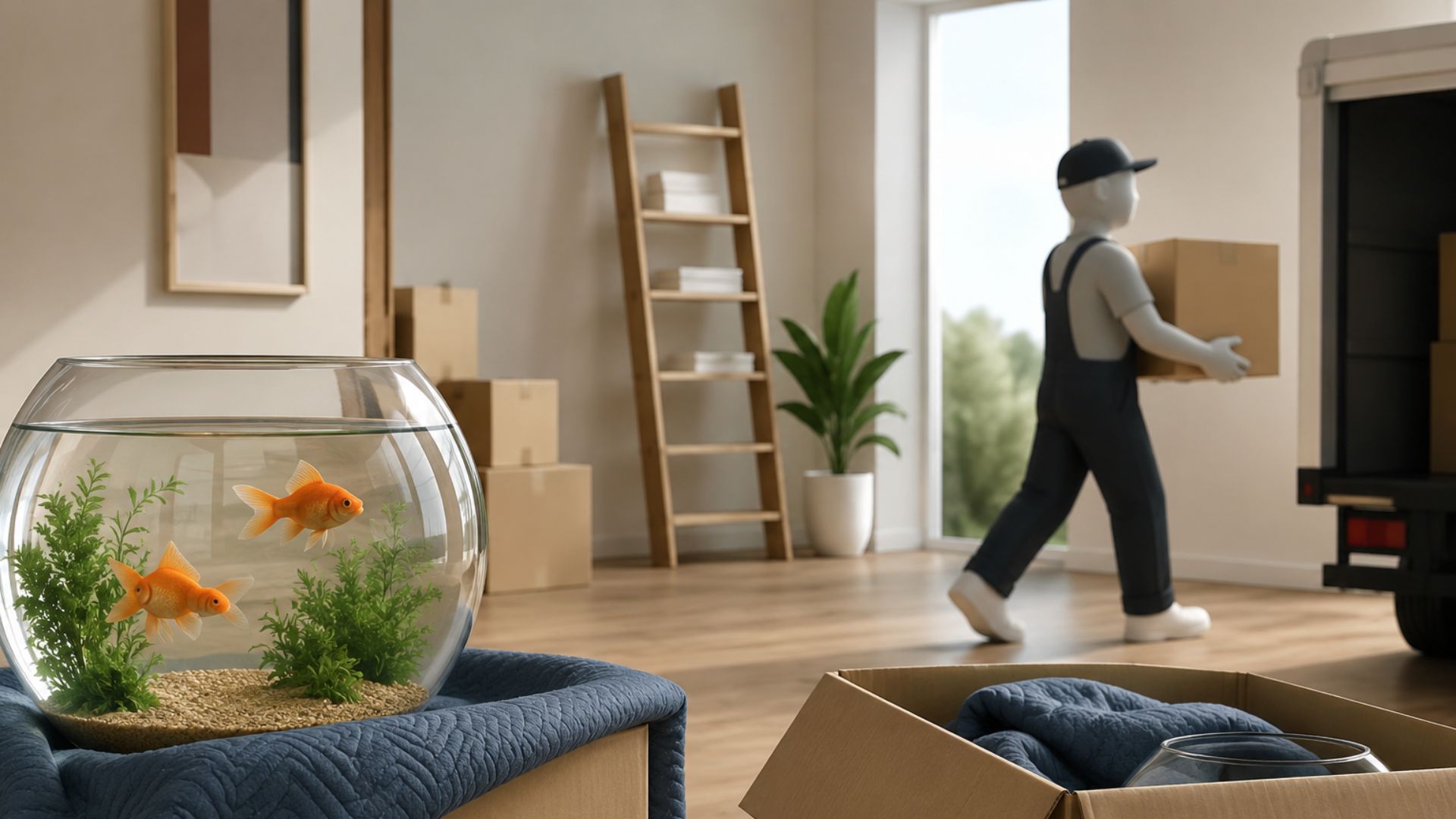
Moving an aquarium is hard work, but infinitely easier if you’re not also thinking about furniture, boxes, or anything else that needs transporting! Ausafe Removals are Brisbane’s premier local removalist company, and we take all the strain out of house moves in Brisbane to ensure they are as fast, efficient, and easy as possible for you from beginning to end.
Ausafe Removals’ efficient team is professionally trained to move all your fragile items, heavy equipment, and furniture, so that you are free to worry about your fish and the aquariums. We work 7 days a week throughout the entire Brisbane and all surrounding areas, we offer a same day service at great prices and we will not damage your property.
Also Checked: How Much Does It Cost To Hire A Removalist In Brisbane
Conclusion
Relocating a fish tank need not be a traumatic experience. If you prepare appropriately, your fish can arrive at their new destination in just as good health as when they left. Plan, save tank water, keep filter media moist, and remember to set up the aquarium first upon arrival. Leave everything else-heavy lifting, furniture, logistics-to Ausafe Removals: Brisbane’s trusted local removalists.
FAQs
Q1. Can I move a fish tank with water inside?
No. Water makes the aquarium unstable by causing shifting weight which will break the glass seals. Always drain your fish tank completely before attempting to move your fish. Transport your fish in sealed bags or buckets while the tank is being moved.
Q2. How long do fish last in a bucket during transit?
Freshwater fish usually only survive for 24-48 hours in an air-pump driven bucket which has a lid. For this long of an amount of time it is necessary to place the bucket in a cooled, insulated container, for example a box, so the water stays cool.
Q3. Do I need to remove the tank from the stand before moving the aquarium?
Yes. It is essential that the aquarium be removed from its stand and that both items be moved separately. This is necessary because otherwise the weight of the tank may cause the stand to tip over, break and injure removalists. It will also significantly decrease the chance of damaging the aquarium itself.
Q4. Should I keep the fish filter running when I move the fish tank?
No, but you should keep the filter media immersed in tank water at all times. There are lots of beneficial bacteria inside and when these are allowed to dry out, they die. The entire fish tank will then have to be re-cycled.
Q5. How do I control the water temperature in a fish bag or bucket during the move?
Use a polystyrene cooler box to store the fish bags or buckets in. Avoid placing the cooler box in direct sunlight or in a hot car boot during Brisbane summers. During winter months use a fish-safe heat pack.
Q6. Should I use a professional removal service to move my fish tank?
Definitely. Fish tanks are very fragile when they have been drained of all water as well as when full of water, and also are rather bulky. Profession removalists who specialize in moving delicate and fragile items, such as AuSafe Removals, know the procedures which will most safely transport your fish tank.