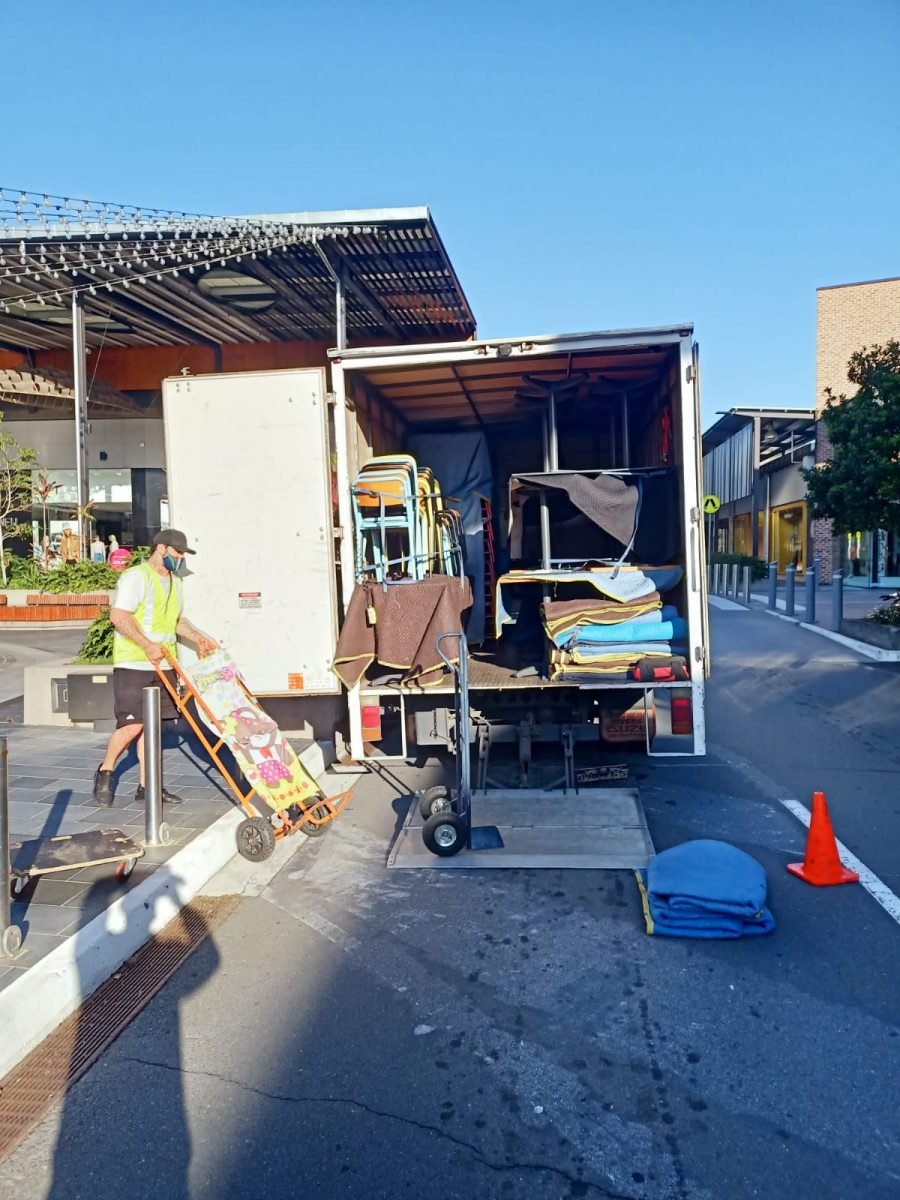
Moving gym equipment is not as easy as shifting regular household items. If it is a treadmill, dumbbells, weight racks, or a stationary bike, these machines are heavy, bulky, and often contain delicate parts. The equipment can easily injure someone or damage your property if not managed properly. Hence, relocating fitness equipment professionally requires proper planning, the right technique, and support from experts.
At AUSafe Removals, we know that moving gym equipment can be both difficult and your perfect opportunity to show off your skills. This is the reason we are giving this guide, where we explain the ways of moving gym equipment without injuries.
List of Tips: How to Move Gym Equipment Safely Without Injuries
1. Reasons Gym Equipment is Hard to Move
Gym machines are made for lifting and long-term use. This means they are often:
- Very heavy and with uncomfortable shapes
- Composed of several pieces
- Uncomfortable to hold
- Difficult to be taken through doors and up stairs
That’s why using the wrong techniques can cause various injuries like muscle strains, back pain, and cuts on the hand.
2. Clean and Prepare the Equipment
Dust, sweat, or grease on gym equipment can make it slippery. Cleaning your surface improves grip and makes sure the equipment does not slip during lifting. Before shifting the item, make sure the surface is spotless, and also do the following:
- Get rid of water bottles, towels, and other things
- Fold and tie up movable parts
- Unplug and disconnect wires or electrical connections
3. Take Apart If You Can
Most gym equipment is so large that it cannot be carried at once. Disassembling them is safe and more efficient. You have to keep screws, bolts, and small parts in labelled bags so you do not lose them during the reassembly. For example:
- Remove the weights from the weight racks.
- You have to detach arms or pedals from elliptical machines.
- Fold the treadmills if they have folding systems.
- Separate the dumbbells into pairs for easy handling.
4. Use Proper Lifting Techniques
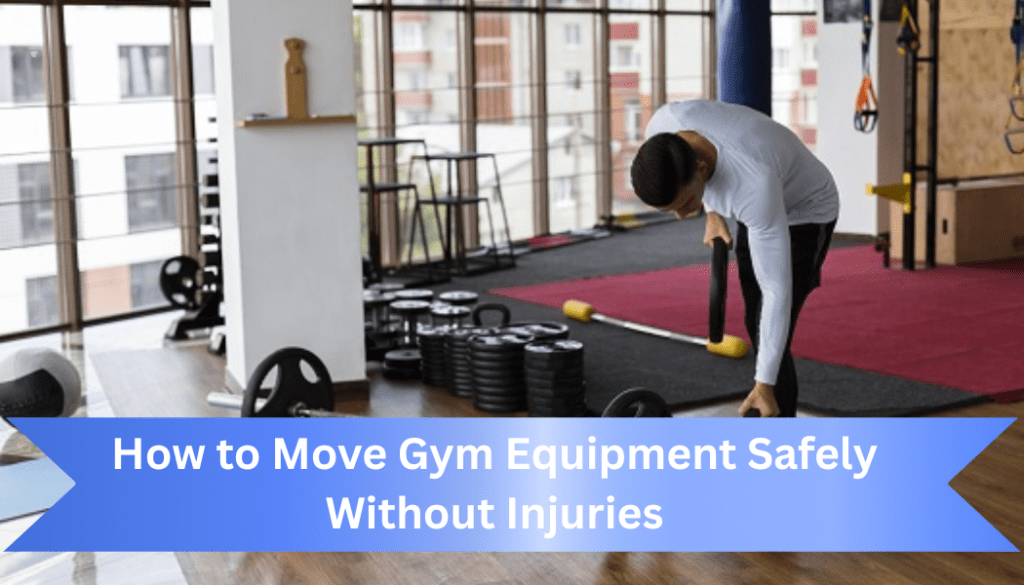
If the items are too heavy, then do not force them. Ask for help or use moving equipment to make the job safe. If you want to avoid injuries, then you should always use the right lifting methods:
- You have to bend your knees; do not bend your back.
- You have to keep the equipment close to your body
- Lift using your legs and core.
- You have to avoid twisting your body while lifting.
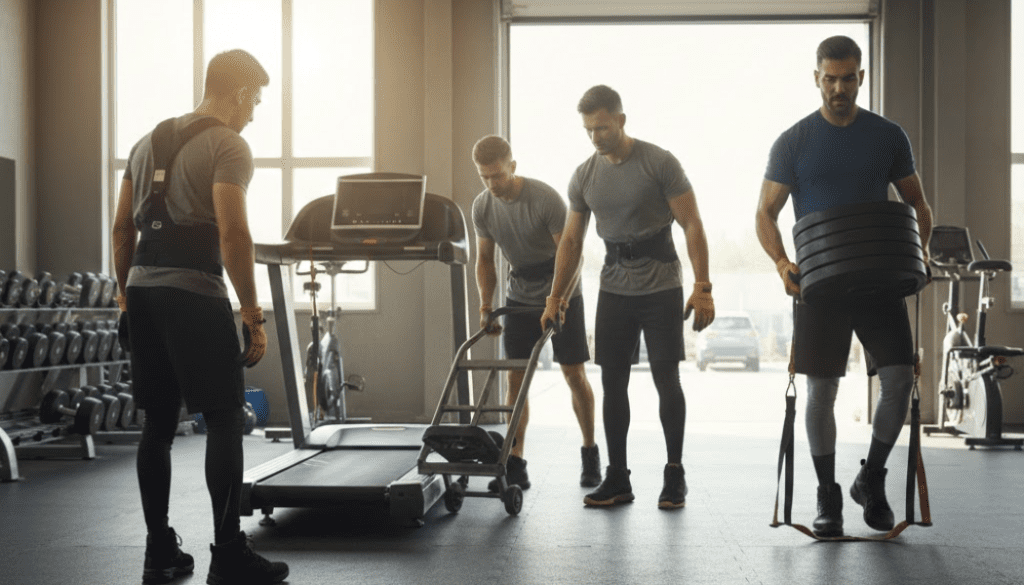
5. Use Professional Moving Tools
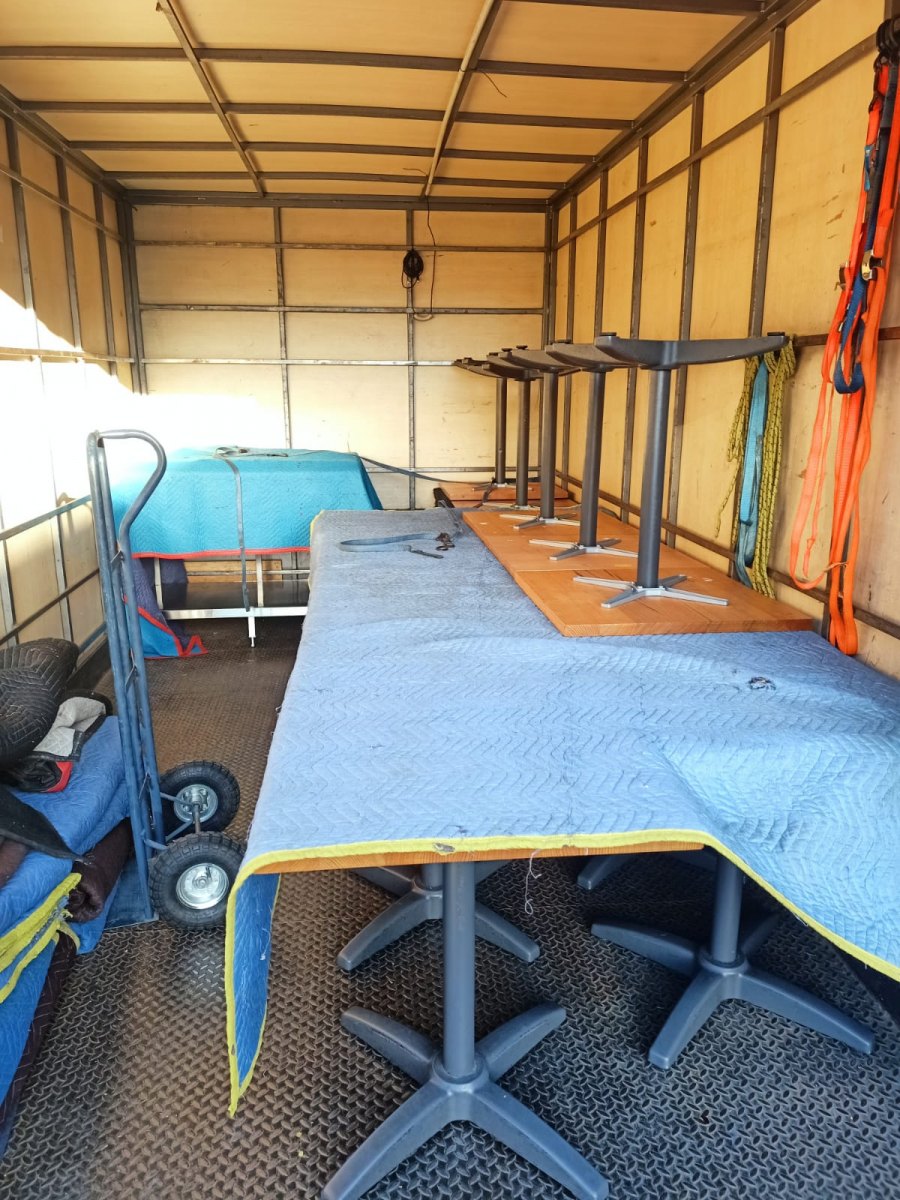
Moving your gym equipment is not easy, but you can make it easy by using the right tools. The tools can help you to lift safely, reduce strain, and protect your floor from scratches. Some of the helpful equipment includes;
- Moving dollies
- Furniture sliders
- Straps and harnesses
- Protective blankets
- Rubber floor mats
6. Protect the Flooring and Walls
Gym equipment can damage floors and walls when being moved. You have to lay down old towels, cardboard, or mats to avoid the scratches. You should use the corner pads and blankets to protect the walls.
This is especially important when moving treadmills or weight machines that can easily bump into the walls while turning.
7. Get Help From Others
You should never attempt to move heavy gym equipment alone. Some of the machines need at least two people for safe lifting. You should always communicate clearly with your moving partner and decide which direction to move and lift at the same time. If no one is available to help, then it is safe to hire professional removalists.
8. Transport Carefully
Proper loading prevents damage to both equipment and the vehicle. When loading gym equipment in the vehicle:
- Put the heavy objects under.
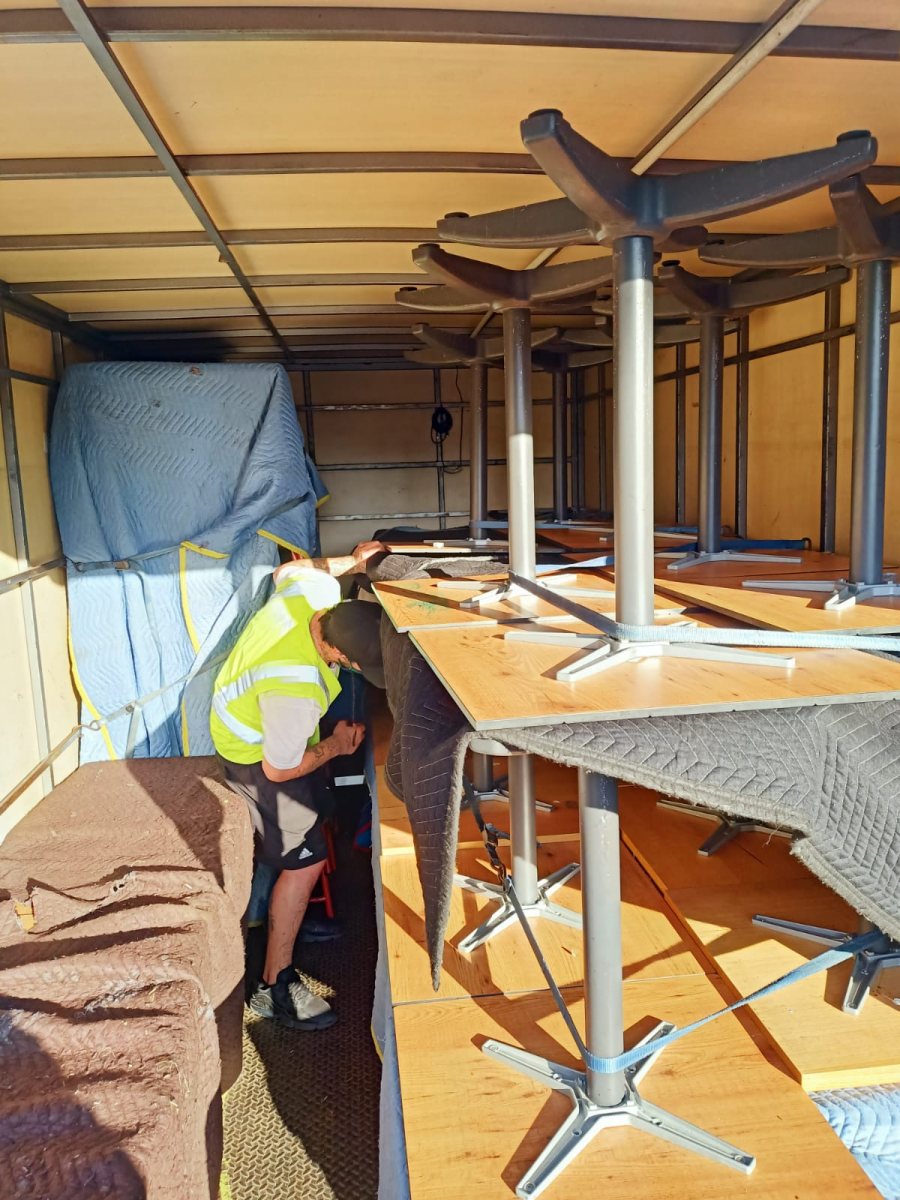
- You should use the straps to secure the machines tightly and to prevent them from moving.
- Padding should cover the fragile parts.
- See to it that the equipment is not moved around in the course of transport.
9. After Moving, Reassemble and Test the Equipment
The proper reassembly provides safety during the first use of the equipment. You reach the arrival at the new place, then you have to:
- You have to reassemble the equipment with the help of the labelled parts.
- You should test the machines slowly before full use.
- Additionally, check the loose parts and unusual noises.
10. Hire Professionals
A professional removalists like AUSafe Removals have the right tools, techniques, and experience to move your gym safely and smoothly. We can move the heavy gym equipments. Additionally, we can help you save time, protect against damage, and lower the likelihood of injuries.
Conclusion
Moving the gym equipment safely calls for proper planning, methods, and tools. Planning properly, cleaning the equipment, and disassembling when necessary can cut the risk of injuries to a low level. You also have to follow safe lifting methods. The best option for a hassle-free and safe experience is always to go for professionals such as AUSafe Removals.
Frequently Asked Questions About How to Move Gym Equipments
1. Is it possible to move heavy gym apparatus by myself?
Gym equipment is not only heavy but also awkward to handle. This can make it more likely to cause injuries.
2. Can I disassemble my treadmill before moving?
You can fold and disassemble a treadmill, making it much easier and safer to move through tight spaces.
3. How can I protect my floors while moving gym equipment?
You can use towels, cardboard, mats, and furniture sliders. These prevent scratches and dents on your flooring.
4. Can I hire professional removalists for gym equipment?
You need professional movers if you want to move with heavy machines. We can move your gym tools and equipment safely.
5. What tools are useful for moving gym equipment?
When you are moving dollies, sliders, straps, harnesses, and protective blankets are helpful for safe and easy lifting.